Yungaburra History
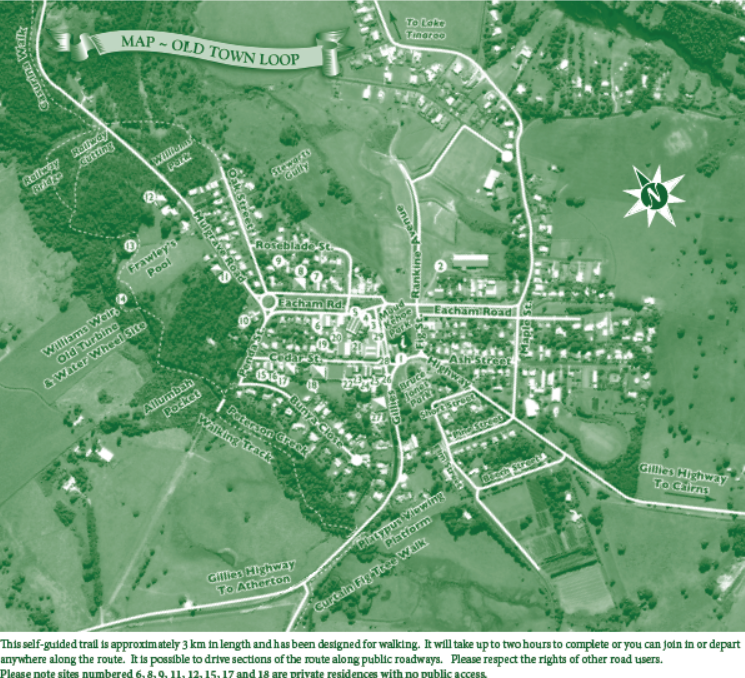
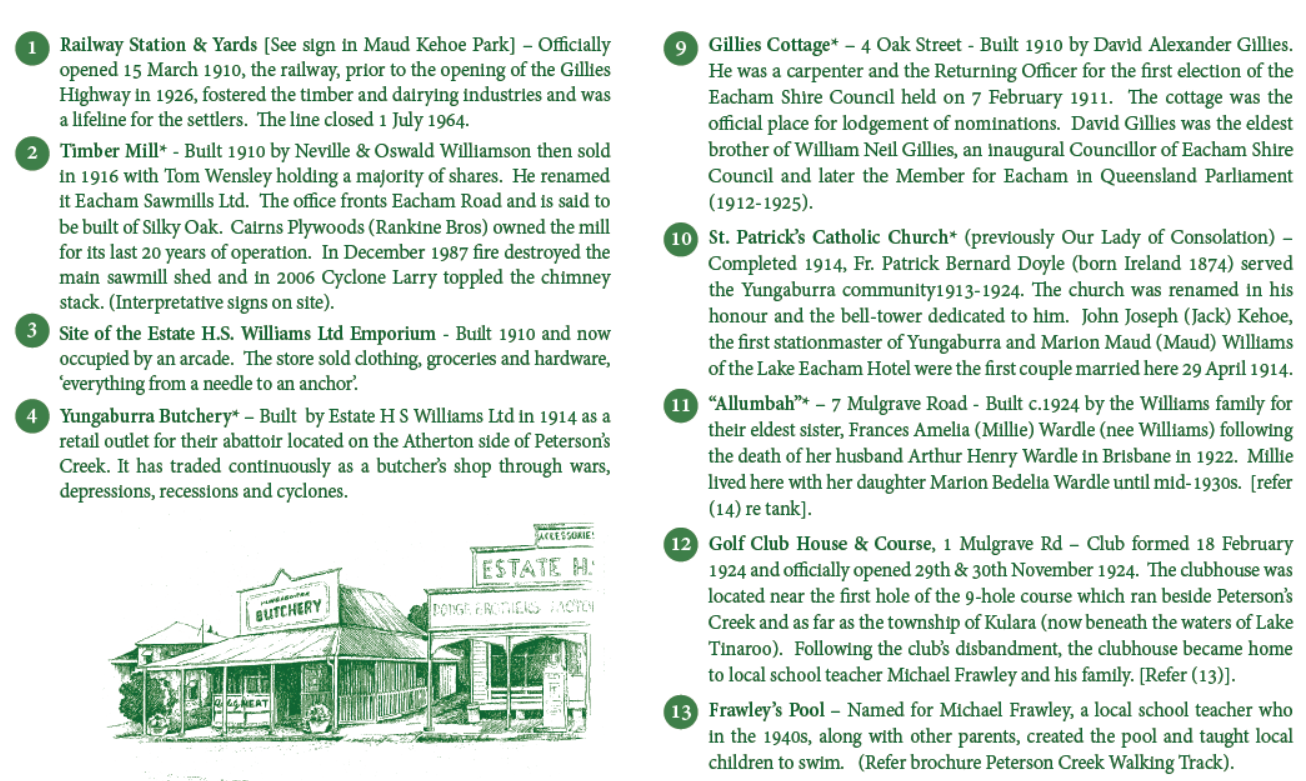
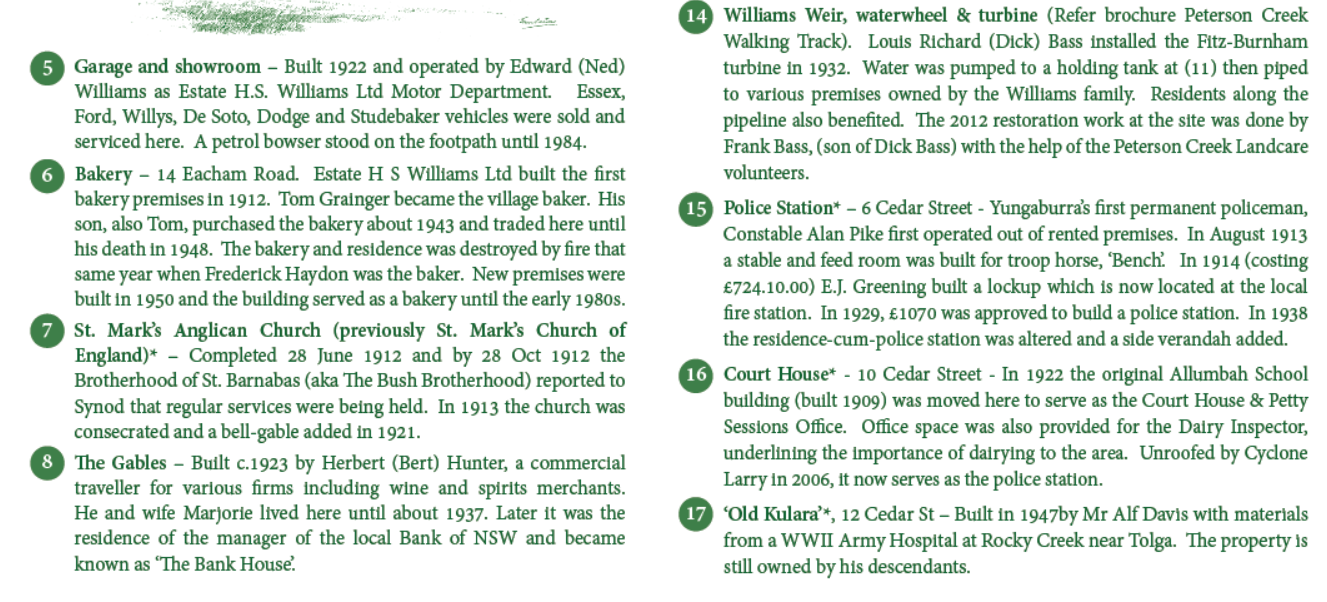
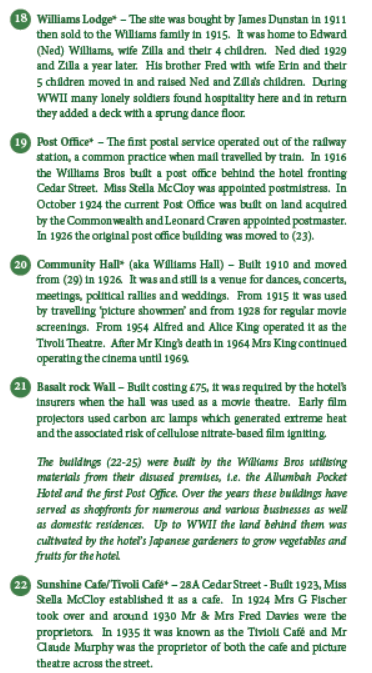
Old Town Loop
The below information is copied from a project of the Yungaburra Visitor Information Centre which acknowledges the contributions of Joan Cairns (Illustrations), Averil Douglas (Research and written composition), Tony Williams (Map) and Ross Robinson (Graphic Design).
The information contained herein has been compiled to the best of the researcher’s knowledge up to the time of publication. The brochure was published by Tablelands Regional Council.
To download the brochure, click on Old Town Loop Brochure.



Yungaburra (originally Allumbah Pocket), takes its name from the language of the Yidinji Aboriginal people. It is said to mean meeting place, a place of enquiring or questioning. Prior to European settlement the area around Yungaburra was inhabited by about 16 different Indigenous groups who met to trade, camp and conduct ceremonies. The traditional home country of the Dulguburra Yidinji Aboriginal clan encompasses land to the north-east of Yungaburra, i.e. Boar Pocket, Danbulla, Tinaroo and Kulara, while the traditional lands of the Ngadjonji people is in the Millaa Millaa- Malanda region.
Europeans flocked to the region following discoveries of gold and tin. The timber-getters followed, drawn by the seemingly endless bounty of beautiful and durable timbers. Many thousands of men were directly or indirectly involved in the getting, hauling and exporting of Tableland timbers. At one stage there were no fewer than 200 bullock and horse teams. Descendants of early timber-getters and settlers still live in the area. The sought a(er timber was Red Cedar (Toona ciliata), but the forests also held Walnut, Queensland Maple, Silky Oak, Silkwood, Black Bean, Silver Ash, and Kauri Pine to name a few. The importance of timber to Yungaburra is reflected in its street names: Cedar, Maple, Pine, Fig, Ash, Bunya, Beech, Elm, Oak and Penda.
James Robson is credited with blazing a track over the Mulgrave Range from Cairns. Before then the way to the mineral #elds was from Port Douglas through Atherton to Herberton. Cobb & Co coaches plied this route then known as the Mulligan Highway. Robson’s Track was a much shorter route but initially was no more than a bridle path. Before the railway pushed through from Cairns to the Tablelands it was used by horse and mule teams and pedestrian trails. The packers carried supplies up and minerals down the track was also known as “The Cairns Road” and today part of the Gillies Highway is shadowed by the original track which ascends out of the Mulgrave River Valley then along the Atherton Spur to Boar Pocket.
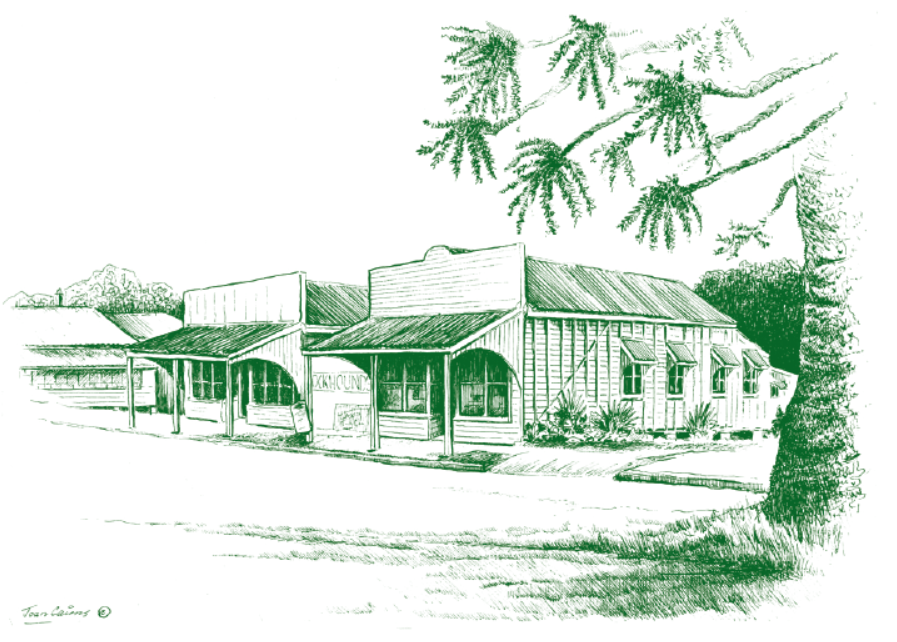
In 1886, the same year it was decided to build a railway line between the coast and the Tablelands, Edward Baird Rankin surveyed land around Lake Eacham and Allumbah Pocket for a Village Homestead Settlement Scheme. The plan offered settlers 40-acre farm blocks with a home site set apart in a village. The scheme failed as settlers needed to live on the land they farmed. By 1890 settlers were moving into the Allumbah Pocket area under the Queensland government’s Closer Settlement Act. At that time the only access to the village was via a bush track which turned south-east onto Robson”s Track. Today, the cemetery occupies the site of the original village. In 1890 John Ignatius Stewart became the #rst permanent settler, then on April 10, 1891 John Musto Roseblade selected 4 portions totalling 153-acres. A requirement of taking up land was that selectors must clear and farm their land or forfeit it. The volcanic landscape and rainforest presented signicant challenges. Settlers became involved in dairying and cropping, although at times the native animals seemed to harvest more of their crops than they did. Selectors continued to take up land at Allumbah Pocket and by 1907 the Walker Bros had opened a store and butchery, Estate H.S. Williams Ltd had built and were operating a store, butchery and a hotel and another store was built by Edward Lisha. In 1909 the Allumbah School opened. The railway line reached Atherton in 1903 and in 1905 a meeting of settlers at Allumbah Pocket requested a branch line be constructed from Tolga to the village.
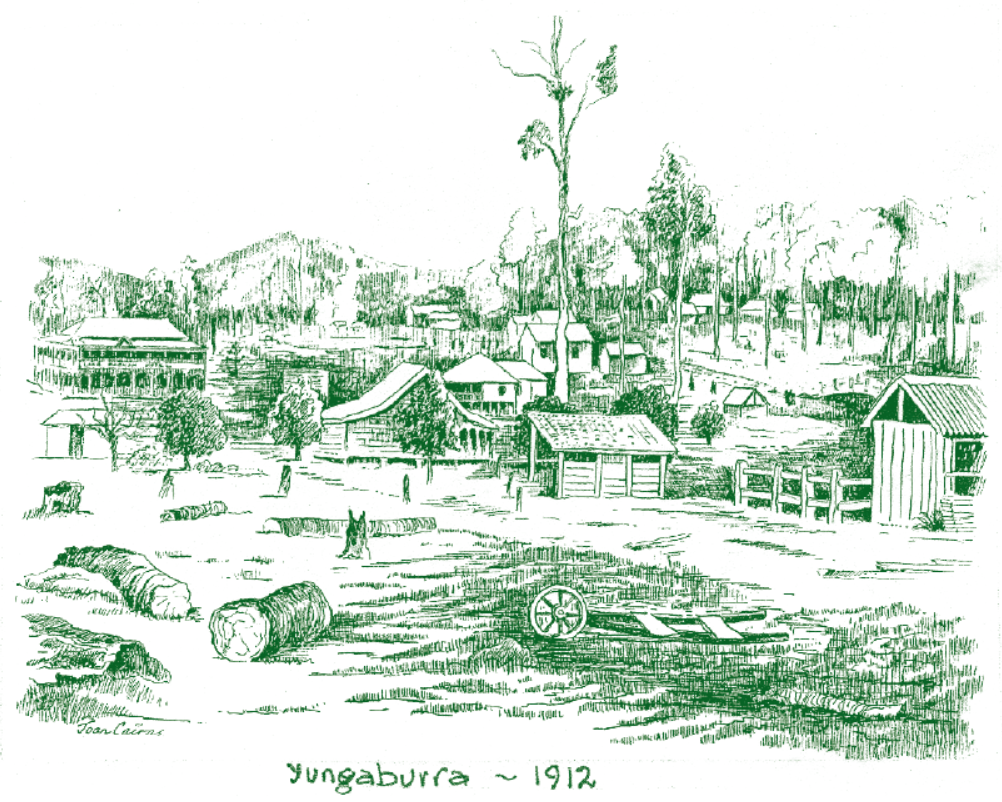
The Coming of the Railway
A proposal was also made to continue the line towards land being surveyed in the Johnstone River and Eacham districts. The word pocket added to place names in the region came about because pockets or clearings in the rainforest had been created by the #res of the Indigenous people. The resultant clearings produced lush grass which provided feed for animals traversing the track as well as comfortable overnight resting places for travellers. Boar Pocket was near the top of the range, further west was Ball Pocket (later Kulara) and then Allumbah Pocket as it was called until 1890.
Between 1890 and 1909 it was known simply as Allumbah. In 1909 the Government reclaimed land for a railway branch line from Tolga and by July that year a 6-acre section of Portions 72 & 73 of George Wedderburn’s farm was designated as the site for the railway station. The Wedderburn Farm had been purchased in 1900 from George O’Donnell who had selected it in 1899. The Railway Department decided Allumbah was too similar to Aloomba, a town near Gordonvale, so with a gazetted name change on 5 Nov 1909 Allumbah became Yungaburra.